
University of Zagreb (UNIZG)
The University of Zagreb was founded in 1669 and is the oldest and largest university in the Republic of Croatia. Today it comprises 31 faculties, 3 art academies and a University Centre, with more than 70,000 students and several thousand academic and research staff, making it the central academic and scientific institution in the country.The University offers undergraduate, graduate and postgraduate study programmes across all major fields of science and the arts. It is actively involved in international research and mobility programmes, particularly within Erasmus+ and Horizon Europe, and maintains extensive cooperation with European and global partner institutions. Special emphasis is placed on interdisciplinary research, innovation and knowledge transfer in collaboration with industry and the public sector.As the leading higher education institution in Croatia, the University of Zagreb plays a key role in fostering a knowledge-based society and continuously strengthens its international visibility and strategic partnerships worldwide.
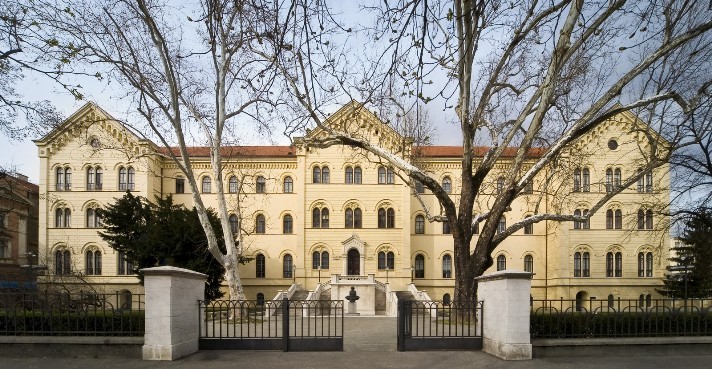
University of Zagreb – Faculty of Geodesy
University of Zagreb - Faculty of Geodesy, is the leading higher education and research institution in the field of geodesy and geoinformatics in Croatia. With a long academic tradition dating back to the 19th century, the Faculty has played a key role in the development of surveying, cartography, spatial data management and geospatial technologies in the region.
The Faculty offers undergraduate, graduate and postgraduate study programmes in geodesy and geoinformatics, educating experts in areas such as land surveying, satellite positioning, photogrammetry and remote sensing, cartography, spatial information systems and geospatial data analysis. Teaching is closely linked with scientific research and practical applications, ensuring that graduates acquire both strong theoretical knowledge and hands-on experience.
Research activities are focused on modern geospatial technologies, Earth observation, digital terrain modelling, spatial data infrastructures and environmental monitoring. The Faculty actively participates in international research and capacity-building projects, particularly within Erasmus+ and Horizon Europe programmes, and cooperates with universities, public authorities and private sector partners at national and international levels.
Through education, research and professional engagement, the Faculty of Geodesy contributes significantly to the development of geospatial infrastructure and sustainable spatial planning in Croatia and beyond.
Sources:·